How Often Should an HOA Bid Out Landscaping?
There is no rule that says an HOA has to bid out landscaping every year. Rebidding has real costs, and most of them never show up on a bid sheet. A better question: is the current relationship working, and how would you know?
Rebid or renew
If your vendor is doing the work, communicating well and pricing fairly, renew. Check pricing every year or two without running a full bid. Rebid when something is actually wrong, or when your scope has changed so much that the old contract no longer fits.
A healthy landscape relationship usually lasts 3 to 5 years or longer, as long as it works for both sides. That is not loyalty for its own sake. The longer a crew works a property, the better they know it.
Read the situation, make your call, then tap.
You reported weedy beds in writing twice. They got fixed once, then slipped again.
Renewal pricing went up, and the vendor showed which lines changed and why.
No complaints, but a new board member wants to "see what is out there".
Two new phases and a second amenity center were added since the contract was signed.
Why constant rebidding costs the community
Every property has its own quirks. The zone that floods after a heavy rain. The valve box buried under a bed. The beds by the pool that the board president walks past every morning. The corner where sprinklers hit the mailboxes if the heads are not adjusted just right.
How long does it usually take a new landscape vendor to really learn a community?
See our answer
Best practice: Six months to a year, longer on complex sites. No matter how good the new crew is, learning the irrigation zones, ponds, amenity areas and problem spots takes time. When you switch, that knowledge walks out the door and the community pays for the learning curve again.
There is a second cost. Constant rebidding pushes vendors to bid low just to win. Landscape maintenance is mostly labor hours. When a bid is priced too low, the only way to make it work is to cut hours, and the property shows it within a few months.
Look at the whole picture: maintenance price, irrigation hourly rate, parts markup, and pricing on extra work and enhancements.
Signs it is time to rebid
Tick each sign you are seeing on your property. The verdict changes as you go.
Your result updates as you go.
What to do about it:
Ready to compare? Get a free quote with a clear, line by line proposal for your property.
Get a free quote
Before you rebid, raise the problem with your vendor directly and in writing. Sometimes the fix is a conversation and a clear expectation. If it does not improve, you have a record that helps the board decide. Our guide to HOA vendor due diligence covers what to look for.
How to check market pricing without a full RFP
Review your scope
Read the contract with fresh eyes. Is the visit count clear? In Houston, a common setup is 42 visits a year: weekly from mid-March through October and every other week from November to mid-March. Are mulch, color, irrigation repairs and enhancements spelled out, or left vague? Also look for repair items bundled into the monthly price, like irrigation repairs, plant replacement or vandalism. A vendor has to pad the price to cover those, so the community usually overpays. Our HOA landscape budget guide explains why those items are better handled as they come.
Walk the property
Walk it with your vendor and a board member. Look at entrances, amenity areas, bed edges, turf and irrigation coverage. This one walk tells you more about value than a stack of bids.
Get an audit
A landscape and irrigation audit is an outside review of how the property is maintained and how the irrigation system is running. It gives the board facts for the renewal conversation, whether you stay or go.
If you still decide to bid, do it with a clear scope so every vendor prices the same work. The commercial landscaping RFP guide walks through the process, and our RFP development service can help you build one.
How to run a clean transition
A sloppy handoff costs you weeks of problems. A clean one lets the new crew get to work fast. Use this list as you go:
Your result updates as you go.
Still open:
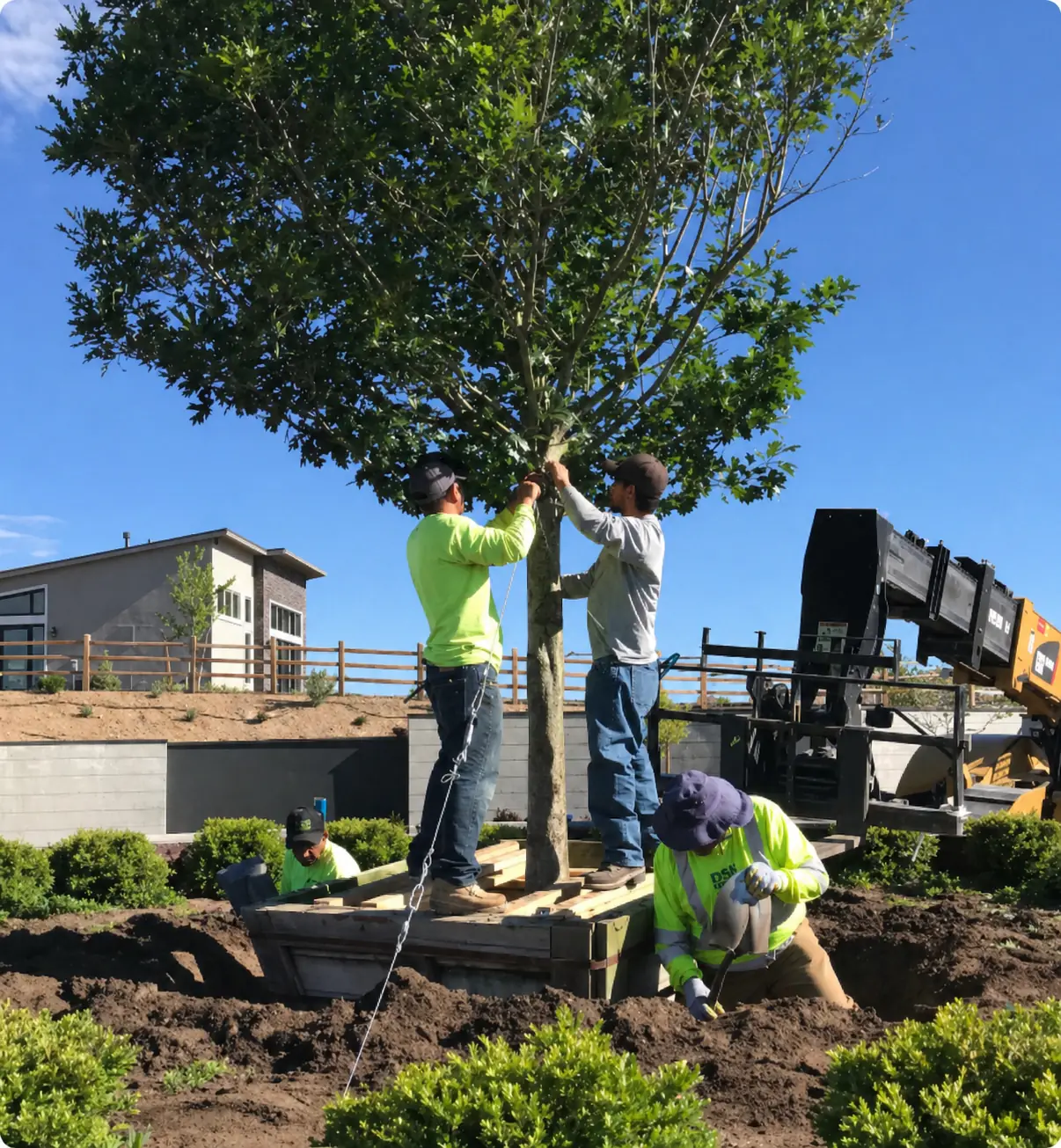
Many HOA contracts start January 1 or March 1. A winter start gives the new crew a slower season to learn the property before spring growth. The Houston commercial landscaping calendar shows how the seasons usually line up.
The bottom line
Rebid when there is a real reason. Renew when the relationship works. Check pricing with a scope review, a property walk or an audit before you jump into a full bid. The goal is not to find the cheapest vendor every year. It is to find the right partner and keep them long enough for the property to benefit from what they learn.
For more on working with a landscape vendor as a board, see our Landscaping for HOA Boards series.