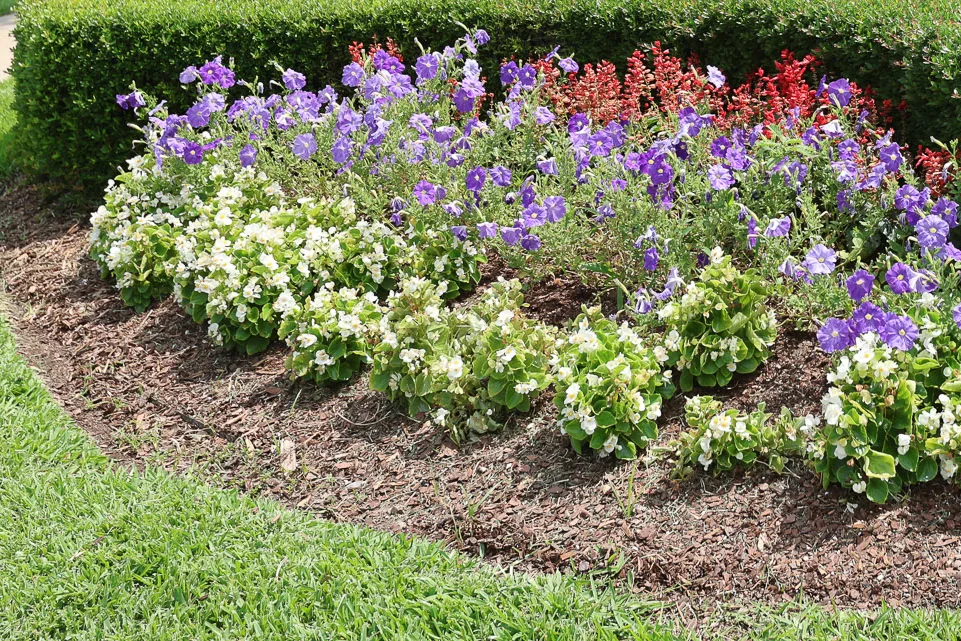
Where seasonal color pays off
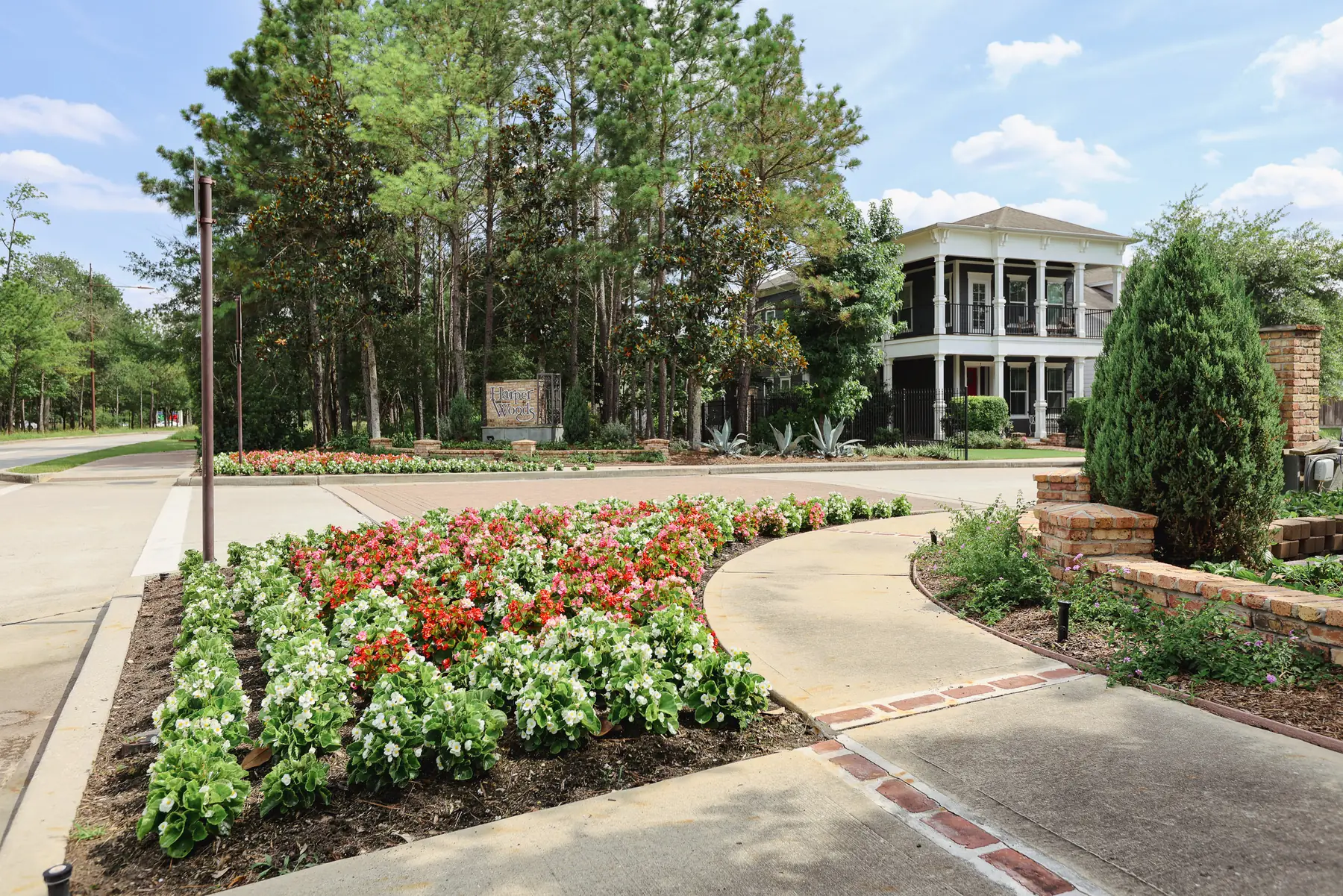
Seasonal color is annual flowers planted in a few high visibility beds and swapped out as the seasons change. It is a small share of the landscape, but it sets the first impression at the entrance, the leasing office or the storefront.
The common mistake is spreading color thin across every bed. A few full beds at the places people actually look will read better than many half filled ones, and they cost less to keep up.
- Main entrance and monument signs
- Leasing office, clubhouse or front door
- Pool and amenity entries
- Retail storefronts and anchor tenant entries
- The first bed visitors see from the parking lot
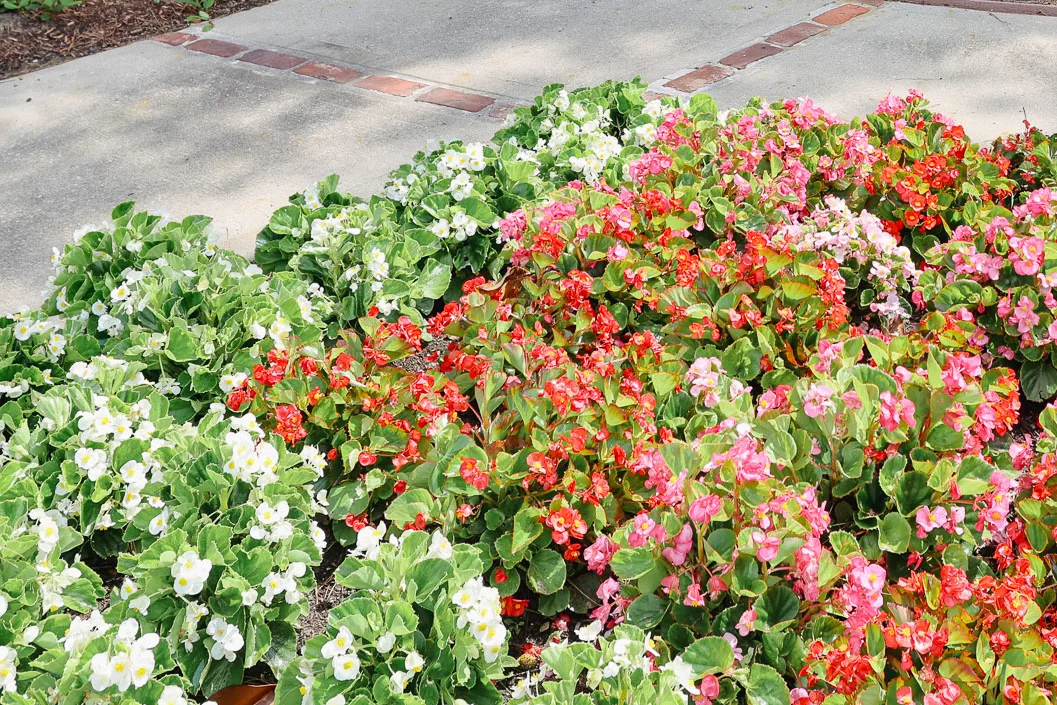
What to plant for a Houston winter
Houston winters are mild most days, with a few hard cold snaps. Winter color has to handle both: cool nights, warm afternoons and the occasional freeze. These cool season annuals do well here.
| Plant | Where it fits | What to know |
|---|---|---|
| Pansies and violas | Sunny entrance beds | Handle frost well. They fade once spring heat arrives. |
| Snapdragons | Back of beds, for height | Bloom from late winter into spring. |
| Dianthus | Borders and edges | Tough and cold hardy, with a long bloom. |
| Ornamental kale and cabbage | Monument beds, for texture | Color deepens as nights get colder. |
| Alyssum | Edging, low spots | Low and fragrant. Fills gaps between larger plants. |
| Petunias | Sunny beds and containers | In Houston they grow well through the cool months. |
| Cyclamen | Shaded beds and containers | Bright color for shade, but cover it in a hard freeze. |
Guess, then tap each card.
Pansies
Vinca (periwinkle)
Ornamental kale
Pentas
Snapdragons
Begonias

The Houston rotation calendar
Most commercial properties in Houston run two rotations a year. High visibility properties, like retail centers and leasing offices, often run three or four.
It is the first week of December and the winter color has not gone in yet. What is the smartest move?
See our answer
Best practice: Plant now, with cold hardy choices like pansies, dianthus and kale. Early December still works in Houston if you choose cold hardy plants and water them in well. Waiting longer gives the plants less time to root before the coldest weeks, and less time on display before the spring swap.
The Houston commercial landscaping calendar shows where color fits with mulch, irrigation checks and the rest of the year.
Count plants, not flats
Color bids are hard to compare when one says "8 flats" and another says "entrance color." The cleaner way is to count plants. Measure each color bed in square feet, pick a spacing, and the plant count follows.
| Spacing between plants | Plants per square foot | Plants for a 100 sq ft bed |
|---|---|---|
| 6 inches | 4 | 400 |
| 8 inches | About 2.25 | About 225 |
| 10 inches | About 1.45 | About 145 |
| 12 inches | 1 | 100 |
Closer spacing looks full sooner but needs more plants. Wider spacing costs less up front but can look thin for the first few weeks. Most 4 inch annuals are planted somewhere between 6 and 10 inches apart.
Tap each card.
Plant count per rotation
Pot size
Bed prep
Replacement terms
Water and cold snaps
Most winter color that fails in Houston fails from water, not cold. New plants need steady water for the first couple of weeks. After that, winter beds need far less than summer beds, and soggy soil invites rot.
- Water new plantings in well and keep them moist while they root.
- Then cut back the controller schedule for the cooler months.
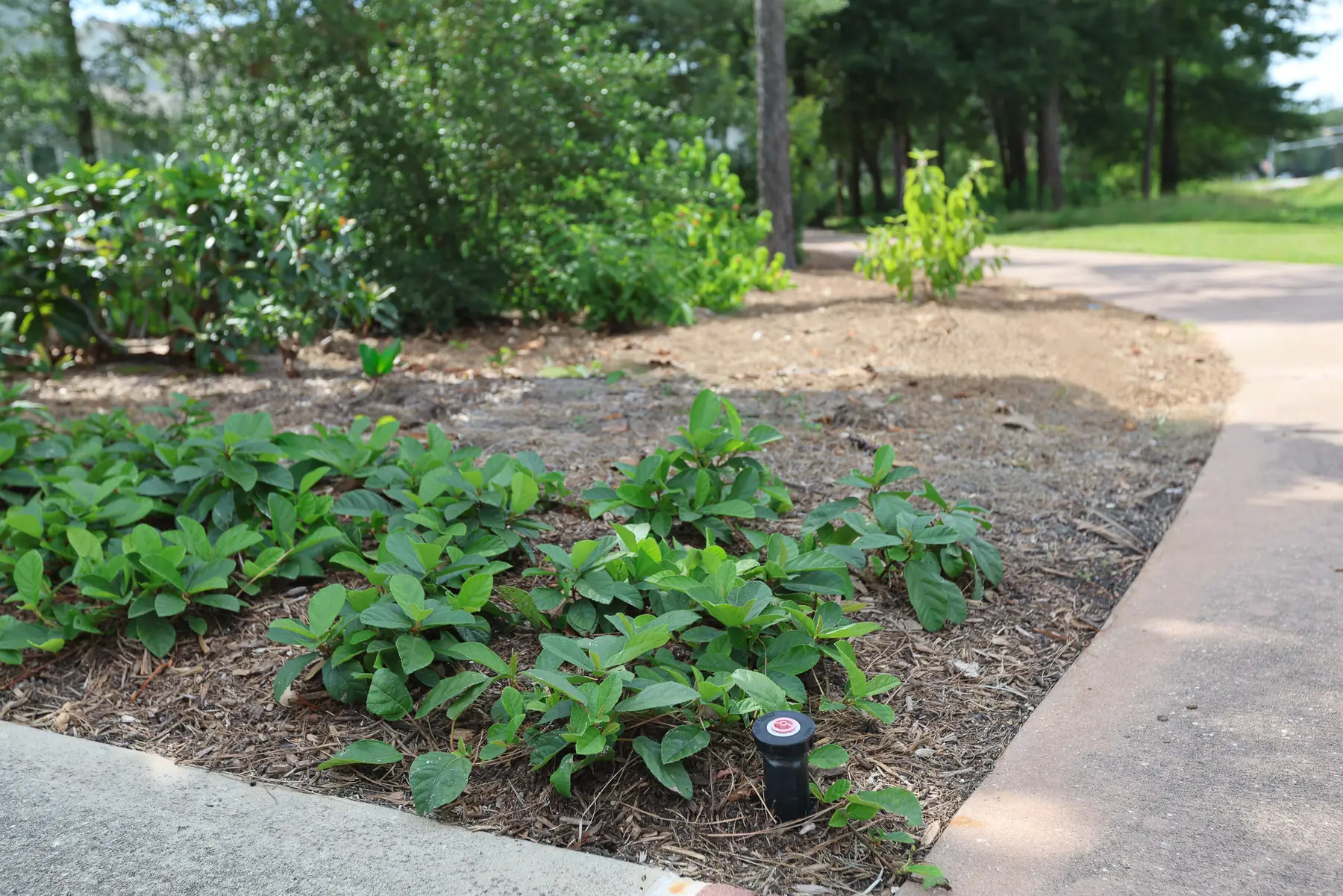
- Drip or bubblers keep water off the flowers. Spray heads that hit the blooms every morning can spread disease.
- Check that heads near color beds are not blocked by new plants.
A hard freeze is forecast for Thursday night. The pansies and kale are three weeks old. What should happen?
See our answer
Best practice: Water the beds a day ahead and cover the most visible ones with frost cloth. Pansies and kale usually ride out a Houston freeze, especially with moist soil and a cover that reaches the ground. Running sprinklers in a freeze puts ice on sidewalks and drives. Our [freeze prep plan](/resources/guides/houston-freeze-damage-commercial-landscapes/) covers the rest of the property.
Budget the rotations
A color budget is simple once the beds are measured: plant count per rotation, times the number of rotations, plus bed prep, plus a small allowance for replacements after a cold snap.
- Decide how many rotations each bed gets. Not every bed needs four.
- Put the highest rotation count on the entrance and the front door.
- Keep a line for freeze replacements so a cold snap is not a special request.
- Ask for color as its own line, separate from mulch and plant replacements.
Seasonal color is usually priced as an enhancement on top of base maintenance. Our Houston commercial landscaping cost guide explains how color fits in a full bid, and HOA boards can use the HOA landscape budget guide to plan it next to the rest of the year. See our enhancements page for how we plan color with you.
Check your color program
Tick what your property already has in place. Your result updates as you go.
Your result updates as you go.
Still open:
Want a color plan for your property? Get a free quote. We will walk the beds with you, measure them and put plant counts in writing.
Get a free quoteSeasonal color questions
What is seasonal color in commercial landscaping?
Seasonal color is annual flowers planted in a few high visibility beds, like entrances, monument signs and storefronts, and replaced as the seasons change. Most Houston properties swap color two to four times a year.
When should winter color be planted in Houston?
Late October through November, once nights start to cool. Early December still works with cold hardy plants like pansies, dianthus and ornamental kale.
What flowers do well in a Houston winter?
Pansies, violas, snapdragons, dianthus, ornamental kale and cabbage, alyssum and petunias do well in sun. Cyclamen adds color to shaded beds but needs a cover in a hard freeze.
How many seasonal color rotations does a commercial property need?
Two a year, winter and spring, is common. Retail centers, leasing offices and other high visibility spots often run three or four. Not every bed needs the same number.
How do you budget seasonal color?
Measure each color bed, choose a plant spacing to get a plant count, then multiply by the number of rotations. Add bed prep and a small allowance for freeze replacements. Ask for color as its own line in the bid.
Will winter color survive a Houston freeze?
Cold hardy plants like pansies, violas, dianthus and kale usually do, especially when beds are watered a day ahead and covered with frost cloth that reaches the ground. Cyclamen and young plantings are more at risk.